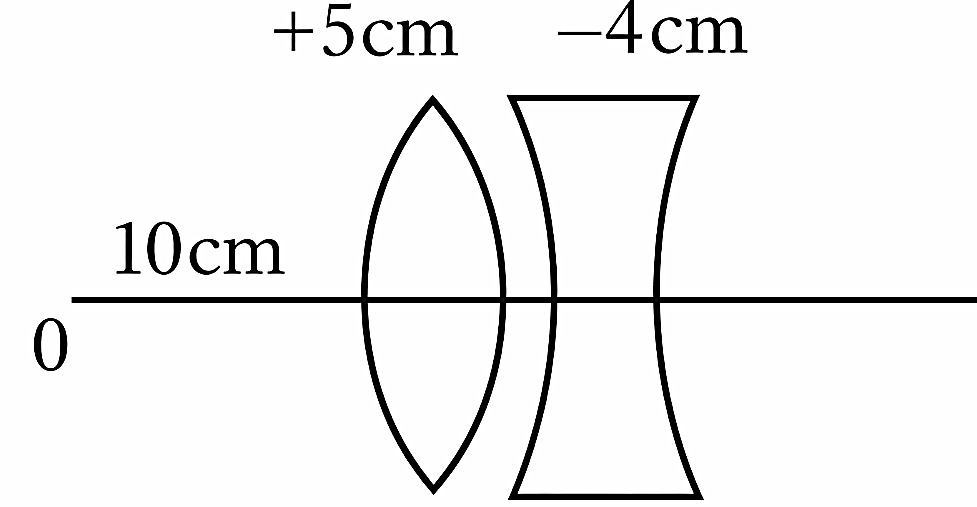
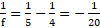
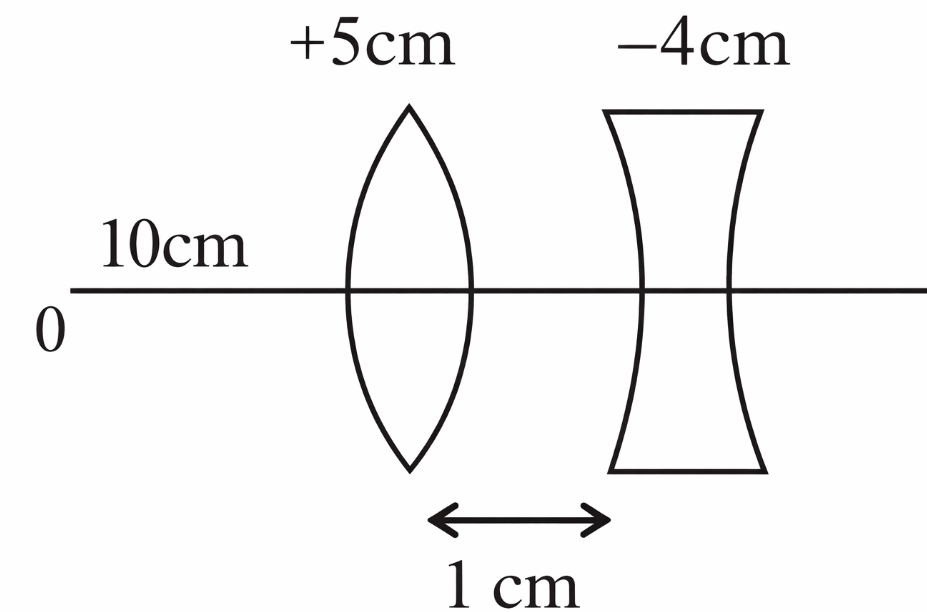
A thin convex lens of focal length 5 cm and a thin concave lens of focal length 4 cm are combined together (without any gap) and this combination has magnification  when an object is placed 10 cm before the convex lens. Keeping the positions of convex lens and object undisturbed a gap of 1 cm is introduced between the lenses by moving the concave lens away, which lead to a change in magnification of total lens system to
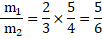
  . The value of
  is
is  .
.
A

B

C

D
None of the above
Text Solution
Verified by ExpertsThe correct answer is:
D


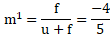
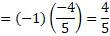
 New configuration
 refraction

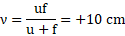

 refraction



Prepare Smarter with CGP Edu
Get practice questions, solutions, and test series in one place.
Write a Review
Share your experience with this question and solution.
Commentary
Send your comment, doubt, correction, or feedback to admin.
Similar Questions
Explore conceptually related problems
As shown in the diagram, when the incident ray is parallel to base of the prism, the emergent ray g…
A thin prism with angle of refractive index 1.72 is combined with another prism of refractive inde…
Consider light travelling from a medium to medium separated by a plane interface. If the light un…
A biconvex lens is formed by using two thin planoconvex lenses, as shown in the figure. The refract…
For a transparent prism, if the angle of minimum deviation is equal to its refracting angle, the re…
Distance between an object and three times magnified real image is 40 cm . The focal length of the …